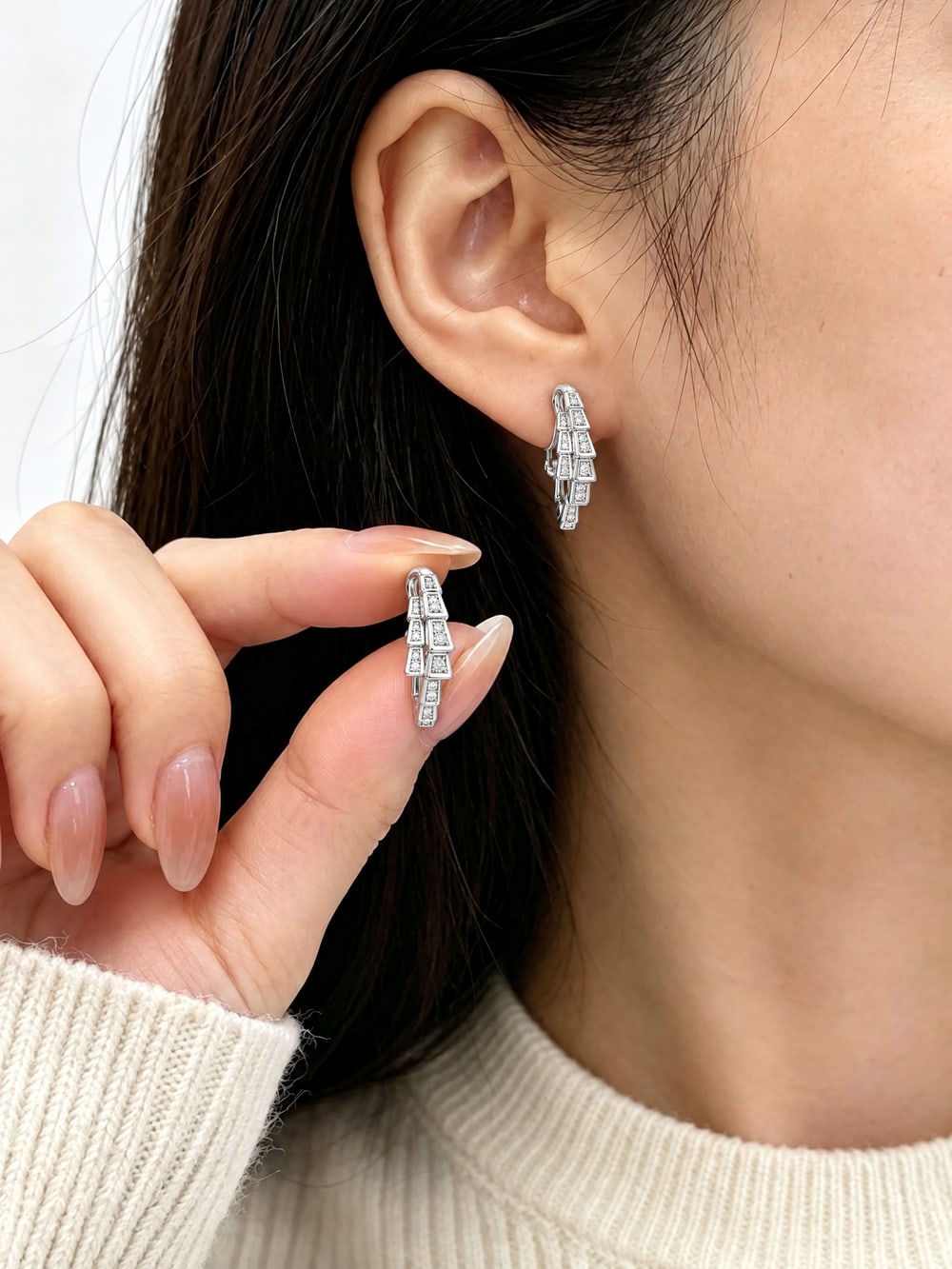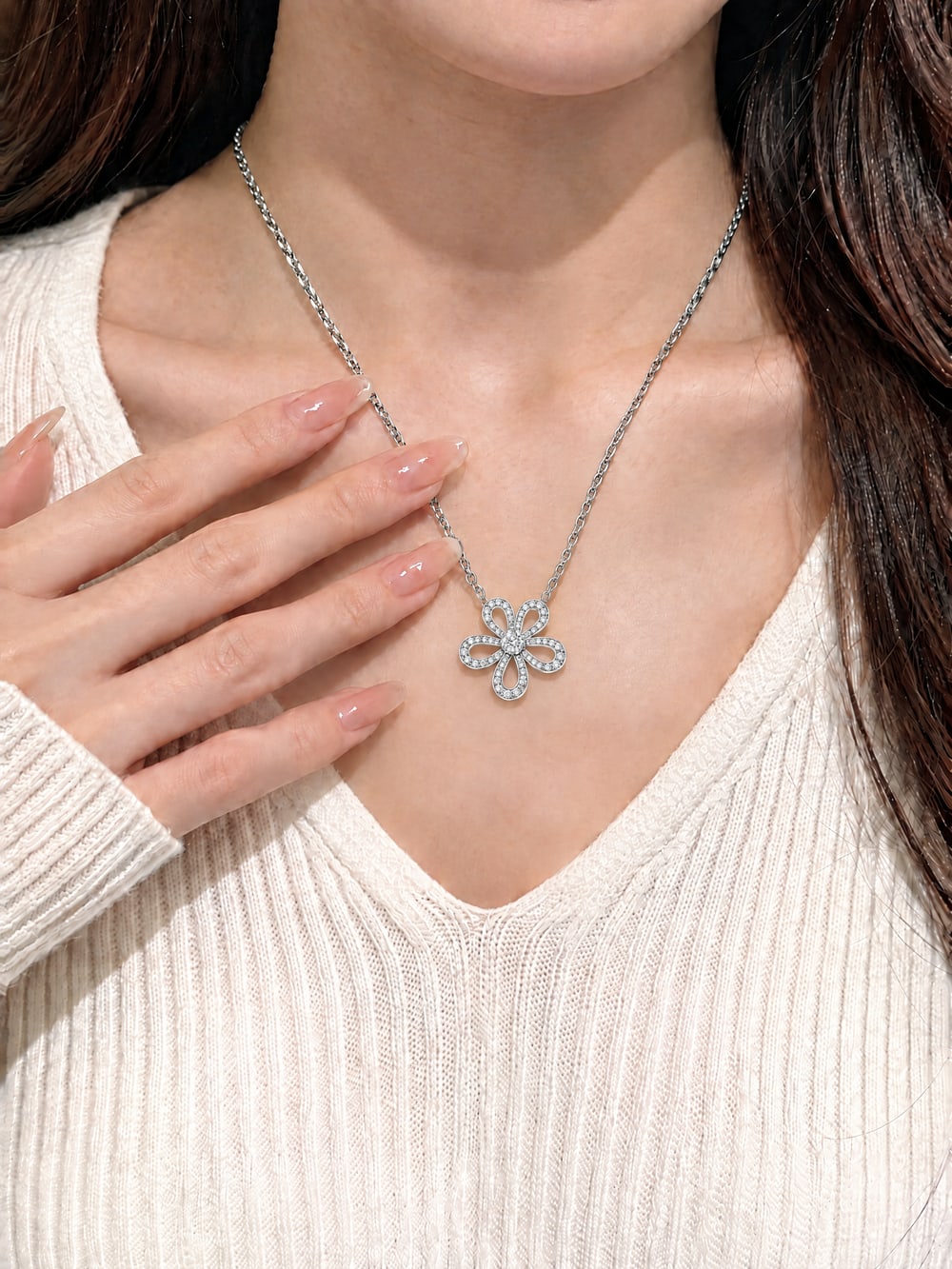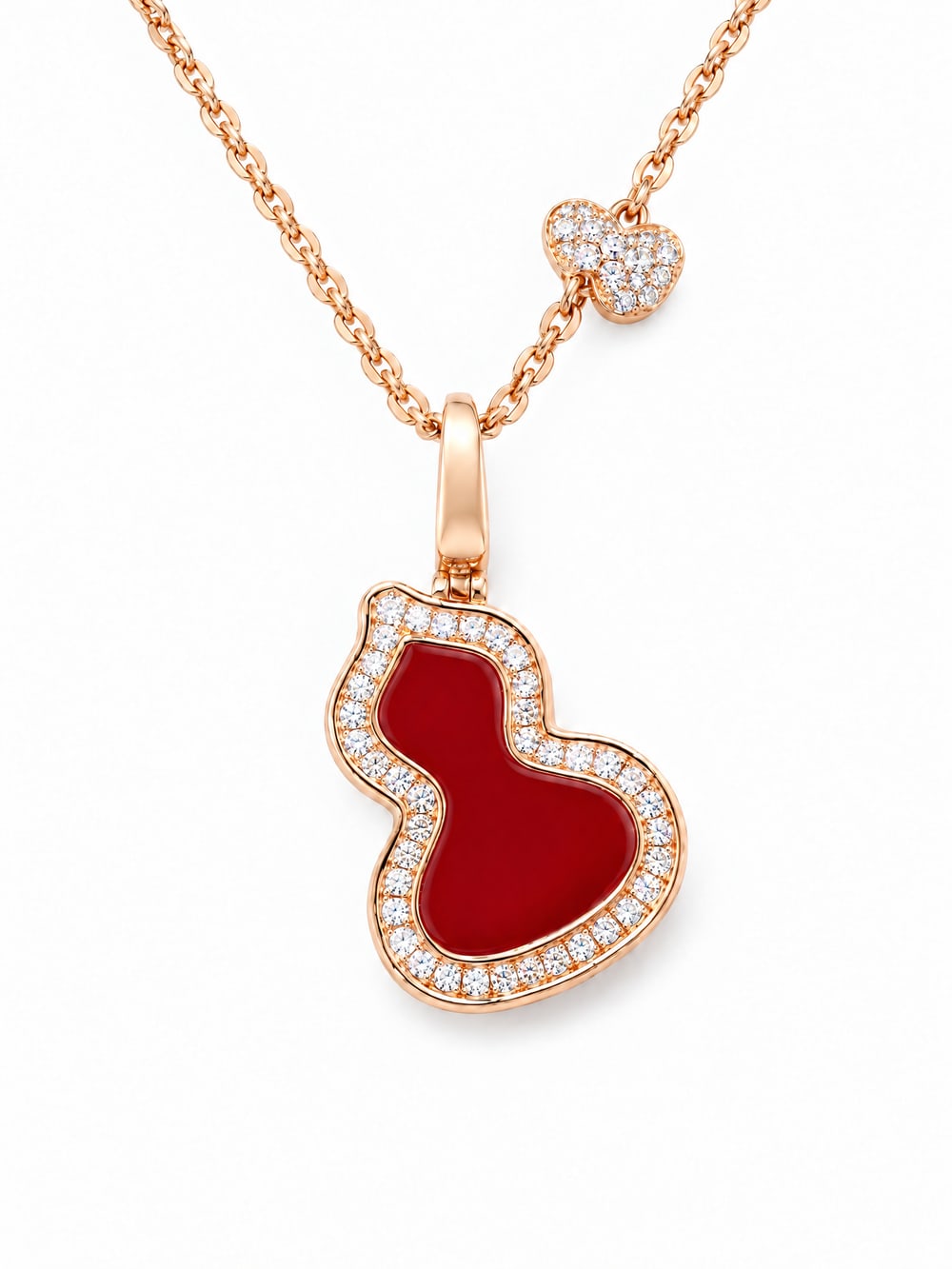
Search for gold jewelry online and you will meet three phrases within a minute: gold plated, gold vermeil, gold finish. They describe the same basic idea — a thin layer of gold over a cheaper core — and they carry very different promises. Knowing which one is on the label tells you most of what you need to know about how the piece will look in two years.
Start with what is underneath
A gold layer is only as good as the metal it covers. Brass and copper are cheap, soft, and will eventually show through as a dark edge at the points of friction. 925 sterling silver is 92.5% fine silver alloyed with copper for hardness: it holds a setting properly, takes a high polish, and if the gold does wear through, what appears underneath is still a precious white metal rather than a green wrist.
This is why "18K gold" on its own says very little. 18K means 75% gold by weight — a genuinely high proportion — but it says nothing about how thick the layer is, and thickness is what you are actually buying.
The vermeil threshold
Vermeil is the one term with a real definition behind it. In the United States, the FTC's jewelry guides require two things for a piece to be called vermeil: the base must be sterling silver, and the gold layer must be at least 2.5 microns thick, at 10 karat or higher. France has its own standard, and it is stricter still.
That number — 2.5 microns, about a hundredth of the thickness of a sheet of paper — is the whole game. Below it, the layer is decorative and will wear at the high points. Above it, the piece behaves more like solid gold in daily use.
So what do we put on the label?
Our pieces are 925 sterling silver, finished in 18K gold after the stones are set — the coating goes on last so nothing is masked by a mask or a setting tool. We describe them as "18K gold finish on 925 sterling silver" and we do not use the word vermeil, because we have not certified the layer against that 2.5 micron threshold and we are not going to borrow a word we cannot document.
If a seller tells you a piece is vermeil, ask for the plating thickness in microns. A supplier who can answer that question has a specification; one who cannot is using the word as decoration.
How a gold finish ages
Gold is soft, and friction is relentless. The places that wear first are predictable: the underside of a ring shank, the edge of a pendant that rubs against a collarbone, the inside of an earring post, the clasp of a chain. How fast depends on four things — layer thickness, how often you wear the piece, your skin's acidity, and how humid your climate is.
- Perfume, hairspray and sunscreen are the fastest killers: they are solvent-based and go on before the jewelry does.
- Chlorinated water and salt water attack the layer and the silver beneath it. Take pieces off before swimming.
- Gym equipment and housework abrade the high points. A chain that rubs against a watch case will thin within months.
- Abrasive polish — toothpaste, baking soda, impregnated cloths — removes gold rather than cleaning it.
Treated well, a gold finish holds for years and can be re-plated when it eventually dulls. Treated as an afterthought, it can look tired in a season. Neither outcome is a manufacturing defect; both are a maintenance schedule.
Written by the Selena Fine Jewelry atelier · published 3 November 2026 · questions? Write to us.