Buying a necklace online comes down to one uncertainty: where will it actually sit? Product photos are taken on one model, at one height, often with a stylist pinning the chain at the back. The number in the specification is the only thing that transfers to your own neck.
The four lengths that matter
| Length | Where it sits | Reads as |
|---|---|---|
| 40–42 cm | Base of the throat, above the collarbone | Collared shirts, high necklines, a small stone |
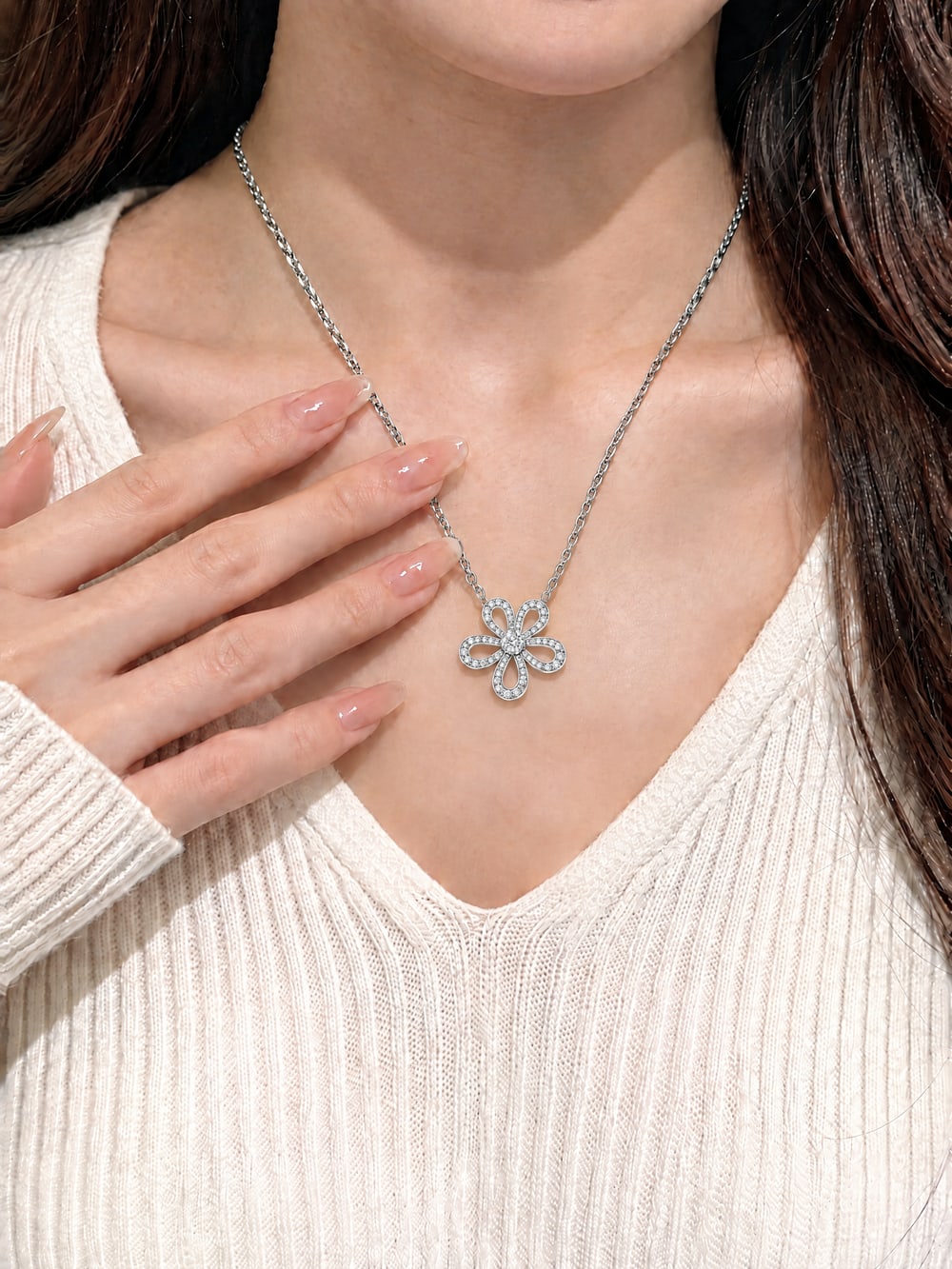
| 43–45 cm | Just below the collarbone | The everyday default — most people's first choice |
| 46 cm | On the collarbone hollow or just under it | Evening, open necklines, layering |
| 50 cm + | Sternum | Deliberate styling; needs a heavier pendant |
Height changes this by a centimetre or two, and so does posture. If you are 160 cm and wearing a crew neck, a 43 cm chain drops into the fabric and disappears; the same chain on someone 175 cm sits clear. When in doubt, choose the shorter length for a crew neck and the longer one for a V neck.
The pendant-to-chain ratio nobody mentions
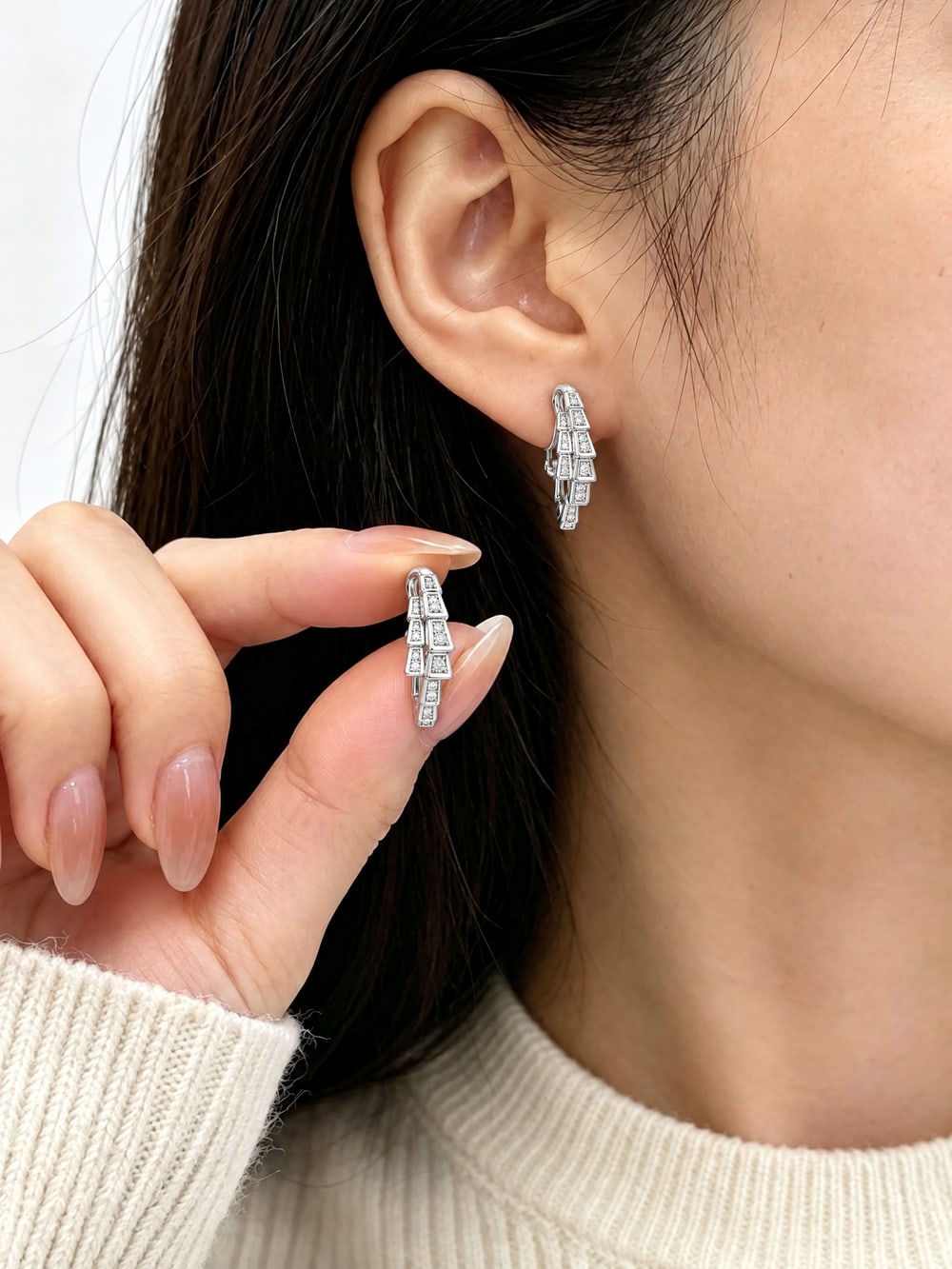
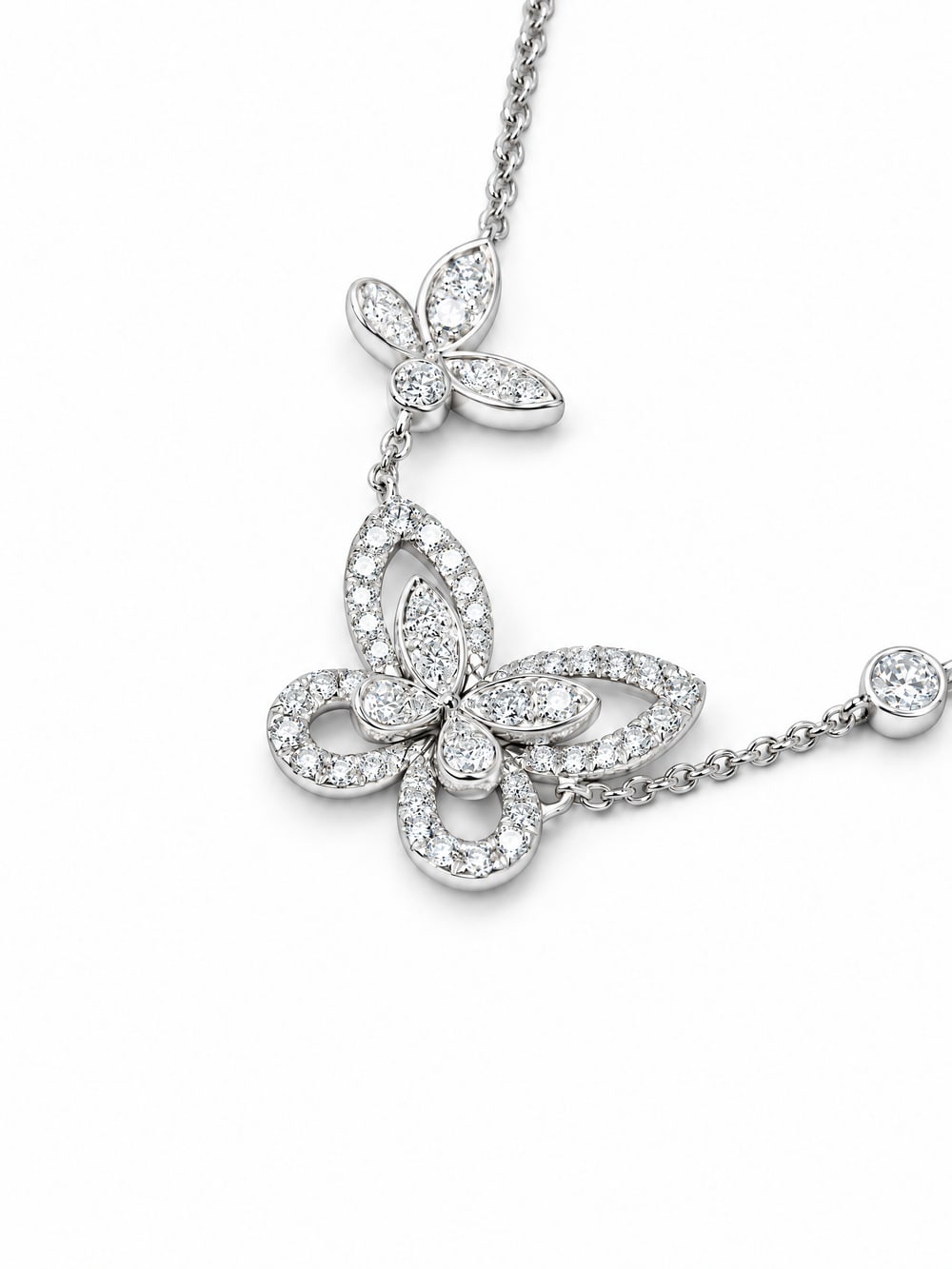
A pendant has a visual weight, and the chain has to carry it. A 22 mm pendant on a 40 cm chain reads as a deliberate, tight composition. The same pendant on a 46 cm chain reads as a small object floating in space. Our butterfly pendant is 18 mm and sits at 46 cm because the piece is light (3.6 g) and meant to read as a detail; the fan pendant is larger and sits at 40 cm, where it has a frame.
The rule of thumb: under 20 mm wants 40–43 cm, 20–30 mm wants 43–46 cm, and anything above 30 mm needs either length or a heavier chain — otherwise the pendant tips forward and shows its back.
How to measure without a tape
- Take a chain you already wear well and lay it flat, clasp to clasp, and measure that distance. That number is your length — not the length of the pendant hanging from it.
- If you have no chain, use a piece of string and a ruler, held at the point you want the pendant to land.
- Remember the drop: a 12 mm pendant on a 43 cm chain finishes at roughly 44 cm on the body.
- Add 3 cm to whatever you measure if you plan to wear the piece over a turtleneck or a coat.
Layering without tangling
Two chains work when the gap between them is at least 4 cm, and when the heavier piece sits lower. Three chains usually need three different link styles — a fine cable, a slightly heavier trace, and something with a pendant — otherwise they read as one thick, messy strand. Chain thickness matters more than pendant size here: two 1 mm chains will braid themselves together within an hour.
A practical test before you buy a second piece: put your existing chain on, mark where it ends on your chest, then hold the second chain against it. If the marks are less than two fingers apart, they will tangle.
Written by the Selena Fine Jewelry atelier · published 29 October 2026 · questions? Write to us.